
Nine fascinating people who lived their lives outside the law to become popular heroes.
1Phoolan Devi: killed 22 men as a revenge for being gang-raped

Also known as the Bandit Queen, Phoolan Devi was born in 1963 in the north of India into a poor low-caste family. She married at the age 11 to a man three times her age, but was abandoned by her husband and her family after the marriage broke down. At her 20s she was subjected to numerous sexual assaults and turned to a life of crime.
In 1979 she was imprisoned in Behmai, an obscure Thakur village. Each night for two weeks, a group of Thakur men gang-raped Phoolan, most times until she lost consciousness. After three weeks, she managed to escape and formed a gang.
Almost two years later, she stumbled upon Behmai to rob the villagers. What began as a robbery transformed into an inquisition when Phoolan recognized two of the men as part of the gang that had raped her. When the villagers failed to disclose the whereabouts of the gang leaders, an infuriated Phoolan assembled the men in a line and opened fire. Of the thirty men who crumbled, twenty-two died in what became known as the St. Valentine massacre, the largest massacre by bandits in Indian history.
Afterwards, police launched a huge manhunt using helicopters and thousands of men, but Phoolan Devi's already high reputation among the poor was enhanced as she frequently outwitted them and evaded capture. She surrendered to the authorities in 1983 in poor health after most of her gang members had died. After serving her time in prison (11 years) she insisted that she was a reformed character and was elected to the Indian parliament. There she tried to establish a reputation as a champion of the oppressed in India. Phoolan Devi's criminal record and subsequent rehabilitation was made into a successful feature film in India and the west.
On July 25, 2001, Phoolan Devi was fatally shot as she got out of her car at the gate of her New Delhi residence. Sher Singh Rana confessed to the murder, saying he was avenging the deaths of 22 Kshatriyas at Behmai.
2 Pancho Villa: the bandit who became a guerrilla leader
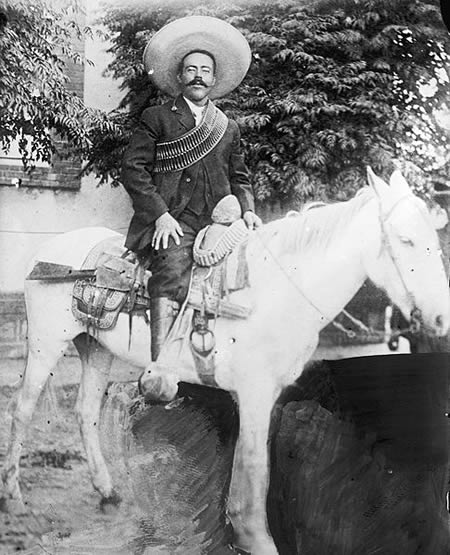
Pancho Villa (1878 – 1923) was a Mexican revolutionary leader who advocated for the poor and wanted agrarian reform. Though he was a killer, a bandit, and a revolutionary leader, many remember him as a folk hero. He was prevented from being accepted into the "panteón" of national heroes until some 20 years after his death but today his memory is honored by Mexicans and many people around the world.
Pancho Villa was born Doroteo Arango, the son of a sharecropper at the hacienda in San Juan del Rio, Durango. While growing up, Pancho Villa witnessed and experienced the harshness of peasant life. When he was 15, his father died, so Villa began to work to support his family until one day he came home and find that the owner of the hacienda intended to have sex with his 12-year old sister. Villa, only 16-years old, grabbed a pistol, shot the owner of the hacienda, and then took off to the mountains. From 1894 to 1910, Villa spent most of his time in the mountains running from the law. By 1896, he had joined some other bandits and soon became their leader. Villa and his group of bandits would steal cattle, rob shipments of money, and commit additional crimes against the wealthy.
By stealing from the rich and often giving to the poor, some saw Pancho Villa as a modern-day Robin Hood. His notoriety as a bandit and his prowess at escaping capture caught the attention of men who were planning a revolution. These men understood that Villa's skills could be used as a guerilla fighter during the revolution. Since Porfirio Diaz, the sitting president of Mexico, had created much of the current problems for the poor and Francisco Madero promised change for the lower classes, Pancho Villa joined Madero's cause and agreed to be a leader in the revolutionary army.
When one of Madero's military commanders, Pascual Orozco, started a counter rebellion against Madero, Villa gathered his mounted cavalry troops and fought alongside General Victoriano Huerta to support Madero. However, Huerta viewed Villa as an ambitious competitor, and later accused Villa of stealing a horse and insubordination. He sentenced him to execution.
Villa was standing in front of a firing squad waiting to be shot when a telegram from President Madero was received commuting his sentence to imprisonment, from which Villa later escaped. During Villa's imprisonment, Gildardo Magaña Cerda, a Zapatista who was in prison at the time, provided the chance meeting which would help to improve his poor reading and writing skills, which would serve him well in the future during his service as provisional governor of the state of Chihuahua.
Villa retired from revolutionary life in 1920 but had only a short retirement for he was gunned down in his car on July 20, 1923.
3Lampião: Brazil's greatest bandit, who would dig his enemies eyeballs out
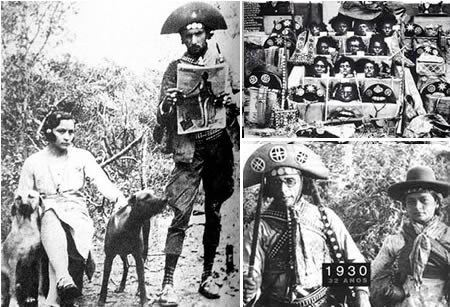
Lampião ("Oil Lamp" in Portuguese) was the nickname of "Captain" Virgulino Ferreira da Silva, the most famous leader of a Cangaço band (marauders and outlaws who terrorized the Brazilian Northeast in the 1920s and 1930s).
Virgulino was born in 1897 in the Northeastern state of Pernambuco, one of the most backward areas of Brazil. During a raid with police at his home, Virgulino's father was killed. It was an event that the police would regret. At age 25, Virgulino became Lampião, the scourge of the backlands and killer of police and soldiers. For the next 15 years he would never be far from the headlines of newspapers throughout Brazil.
Lampião was a complex and brutal man. He was also vain, appearing in dozens of photos and giving interviews whenever possible. His band rarely totaled more than 40 men, but he would fight battles against up to 200 militia or special police.
The cancageiros also had women in their band. The most famous was Maria Bonita (Pretty Mary), Lampião's companion until death.
Not only did Lampião wipe out whole households of enemies at times, he would assault small towns and cities alike, killing police, asking local merchants for "contributions", seizing any good he could carry off and often distributing those which he could not to the local population. Often women were raped. Mostly, these were women associated with the police and/or any opposing faction. Early in his career, Lampião and over 20 of his band gang raped a young wife of a soldier, while the poor man was forced to watch. Incidents of Lampião digging out a man's eyeballs with a knife and cutting off a woman's tongue have also been substantiated.
In 1938, Lampião's long career ended. He was betrayed by one of the local supporters who told where he was. One morning 50 soldiers armed with machine guns crept up and surprised the cangaceiros. Lampião and Maria Bonita were killed. To insure that the news of Lampião's death would be believed, the soldiers took the heads of the captives to Salvador, were they remained on display for over 30 years.
For some people, Lampiao is said to be the Robin Hood of Brazil. The difference is that Robin Hood didn't start his career robbing sick bed-ridden 90 year old ladies.
4Billy the Kid: believed to have killed one man for each year of his life
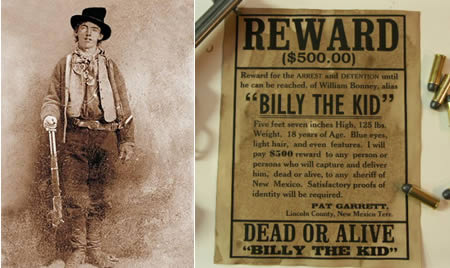
Henry McCarty (1859 - 1881), better known as Billy the Kid, but also known by the aliases Henry Antrim and William H. Bonney, was a 19th-century American frontier outlaw and gunman who participated in the so-called Lincoln County War. According to legend, he killed 21 men, one for each year of his life, but he most likely participated in the killing of fewer than half that number.
While fact and myth are often difficult to separate, it seems Billy the Kid earned his reputation as one of the Desert Southwest's most prolific killers. History records that in a period of just 4 years, he fought in at least 16 shootouts, killed at least 4 men himself, and assisted in the murder of at least 5 others.
When he was young, in Silver City, Kid Antrim, as he was then called, was arrested for theft but escaped jail and began wandering the desert southwest and northern Mexico. In Arizona, he took up horse rustling, and on August 17, 1877, shot and killed his first man -- blacksmith, F.P. Cahill -- in a Camp Grant Saloon.
Billy fled Arizona and an indictment for murder, eventually arriving in Lincoln County, New Mexico where he became known as Billy Bonney, a young horse rustler fluent in Spanish and popular with Mexican women.
McCarty (or Bonney) was 5 ft 8 in-5 ft 9 in tall with blue eyes, a smooth complexion and prominent front teeth. He was said to be friendly and personable at times, and many recalled that he was as "lithe as a cat". Contemporaries described him as a "neat" dresser who favored an "unadorned Mexican sombrero". These qualities, along with his cunning and celebrated skill with firearms, contributed to his paradoxical image, as both a notorious outlaw and beloved folk hero.
A relative unknown during his own lifetime, he was catapulted into legend the year after his death when his killer, Sheriff Patrick Garrett, along with co-author M.A. "Ash" Upson, published a sensationalistic biography titled The Authentic Life of Billy, the Kid. Beginning with Garrett's account, Billy the Kid grew into a symbolic figure of the American Old West.
Historians speculate that his image was created deliberately to distract the public's attention from the nefarious activities of the Dolan faction and their influential supporters in Santa Fe, notably regional political leader Thomas Benton Catron.
5Salvatore Giuliano: the Sicilian Robin Hood
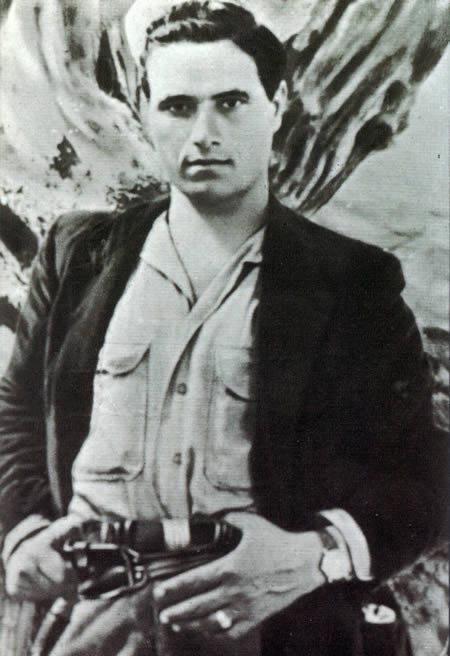
Commonly compared to the legend of Robin Hood, Salvatore Giuliano (1922 – 1950) was a Sicilian peasant famous due to stories pertaining to him helping the poor villagers in his area by taking from the rich. The millennial subjugated social status of his class led him to become a bandit and separatist who has been mythologized during his life and after his death.
As a member of the Sicilian Independentist Movement, Giuliano actively pursued efforts into gaining independence for the island from the Italian government. His story gained attention in the media worldwide, in part due to his handsome looks, including features in Time magazine.
He was born on November 16th 1922 in the western Sicilian mountain village of Montelepre which means "The Mountain of the hare". He was the last of a long line of Sicilian mountain bandits and the last of the "honorable" men. The mountain bandits of Sicily have nothing to do with the city mafiosos. They were a breed unto themselves with a special code of honor and morals. They were truly the friends of the poor and they gave freely of their plunder of the rich to the poor. Turridu (the diminutive of Salvatore) was no different and even today you will find older people in the mountain villages around Palermo who still sing his praises.
Salvatore went to school until the end of primary school at which time he had to go to work, but he didn't stop studying and went to the local priest and the local school teacher to continue his studies on his own. He was a very well read man with a great amount of culture for a Sicilian "campagnolo" and he used his knowledge to help people. Giuliano's life in banditry, like many, came out of necessity.
After his father death, his eldest brother provided wheat for Giuliano's family, but he was called to war. So it was up to Salvatore, just twenty years old at the time, to provide the necessities for his family.
He was inexperienced of the modus operandi used in moving the wheat and so on the 2nd of September 1943, he ran into a patrol of two country wardens and two carabinieri (rural police). His prayers and explanations were of no use. He was accused of smuggling two sacks of wheat of about forty kilos each. They seized his mule and wheat. They wanted to arrest and take him to the "American garrison".
The young Giuliano tried to flee but the soldiers fired six times at him. He was hit twice in his hip. The carabiniero Giuseppe Mancino was ordered to finish him off, if he was still alive. Giuliano, who heard this, leaped forward and wounded him seriously with a pistol which he had kept in his boot. The soldier died of his wounds the following day, while Giuliano regained his full health after a month struggling for his life. He then sought refuge in the hills around Montelepre.
And this is how Turrido became the last mountain bandit of Sicily. In his politics he was anti-communist, anti-Mafioso and one of the leaders of the separatist movement in Sicily. He was vilely murdered in his sleep on the 5th of July 1950 by his own cousin under orders from the Palermo mafia dons.
6Ishikawa Goemon: the Japanese bandit who was boiled alive
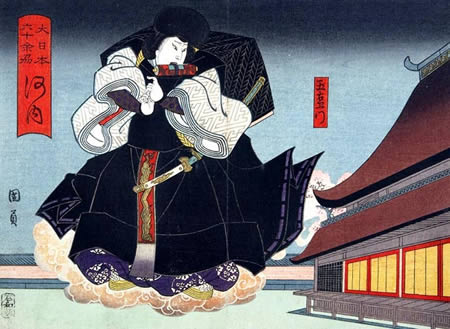
Goemon, whose full name is Ishikawa Goemon (1558-1594) was a legendary bandit hero who stole gold and valuables and gave them to the poor. There is little historical information on Goemon's life, and thus he has become a folk hero, whose background and origins have been widely speculated upon. He is notable for being boiled alive after a failed assassination attempt on Toyotomi Hideyoshi. A large iron kettle-shaped bathtub is now called a Goemon-buro (Goemon-bath).
In one version of the story, Goemon tried to assassinate Hideyoshi to avenge the death of his wife and capture of his son, Gobei. He entered Hideyoshi's room but knocked a bell off a table. The noise awoke the samurai guards and he was captured. He was sentenced to death by being boiled alive in an iron cauldron. He was executed in front of the main gate of the Nanzenji Temple in Kyôto. His young son was also put in the cauldron but it was said that Goemon held his kid above the boiling water up to his death.
7Dick Turpin: the English highwayman who gave a 30 min speech before his execution
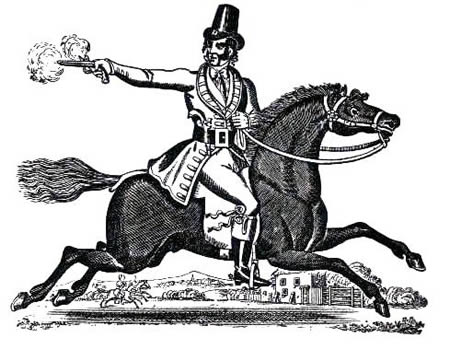
An infamous English rogue, Richard Turpin (1705 – 1739) was maybe the Britain's greatest highwayman. Turpin engaged in poaching, burglary, cattle rustling, horse theft, highway robbery and murder before being executed in York. After his death, as "Dick" Turpin, he became the subject of legend, romanticized as dashing and heroic in English ballads and popular theatre of the 18th and 19th century and in film and television of the 20th century. There is divergence between history and legend.
He was born in the county of Essex in 1706 to a country farmer. As a young man, he became apprenticed to a butcher and soon set up his own shop on the outskirts of London.
But rather than rely on legitimate suppliers, Turpin stole sheep, lambs, and cattle, an offence punishable by death. He was soon caught stealing two oxen and fled the area and left his wife and business.
Turpin moved to Essex and fell in with the Gregory Gang. Far from dashing post-road stickups, this troupe specialized in invading domiciles where they would torture women into revealing the household stashes of valuables.
Upon the breakup of the Gregory Gang, the gang members left still indulging in criminal behavior were Turpin himself and the raucous Thomas Rowden. The duo changed from robbing isolated farmhouses to robbing stagecoaches passing through Epping Forest, which they found easier for two men instead of a gang. Turpin had become the highwayman that later tales would tell of.
By late 1737, Turpin had achieved such notoriety that another bounty of £100 was placed on his head - a reward which was to transform him from a footpad into a murderer.
His end, if not heroic, was certainly attention-grabbing. Turpin settled in Yorkshire under the alias “John Palmer” and passed as a gentleman farmer … with a larcenous side business rustling stock.
His cover was blown most ingloriously, when he was detained as a possible horse thief and sent a pseudonymous letter to his brother in London asking for help. The brother was too cheap to pay the postage due, so the letter returned to the post office where Turpin's schoolmaster chanced to see writing in a hand he recognized, and journeyed to York to identify the wanted man and pocket the reward.
In April of 1739, Dick Turpin was driven through the streets of York in a wagon to the hangman's noose. Dick Turpin waved and smiled. Upon reaching the gallows, he launched into a thirty minute speech to entertain the crowd. Then he grabbed the noose, threw it about his neck, and jumped off the ladder. He died five minutes later.
It is only in his last act of death, that Dick Turpin showed any of the bravado that would characterize the Dick Turpin of legend. Like most outlaws, Dick Turpin was a nasty, brutal, and uncaring man. Yet somehow, he has earned a measure of immortality in the stories of the great outlaws.
8Ned Kelly: the Australian outlaw who killed policemen
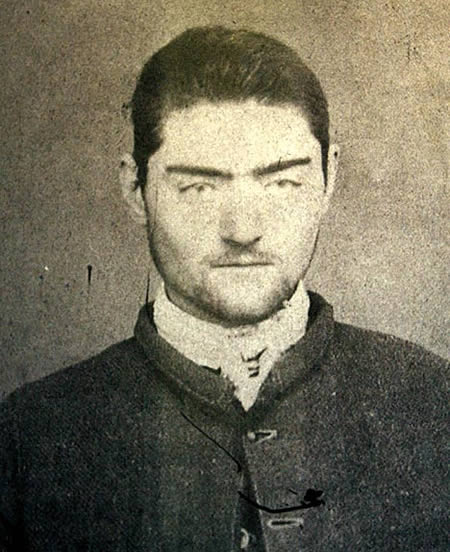
Edward "Ned" Kelly (1854 – 1880) was an Australian bushranger, and, to some, a folk hero for his defiance of the colonial authorities. Kelly was born in Victoria to an Irish convict father, and as a young man he clashed with the police. Following an incident at his home in 1878, police parties searched for him in the bush. After he murdered three policemen, the colony proclaimed Kelly and his gang wanted outlaws. A final violent confrontation with police took place at Glenrowan.
Kelly, dressed in home-made plate metal armour and helmet, was captured and sent to jail. He was hanged for murder at Old Melbourne Gaol in 1880. His daring and notoriety made him an iconic figure in Australian history, folk lore, literature, art and film.
9Belle Starr: the outlaw queen who would use her womanly charms to release gang members
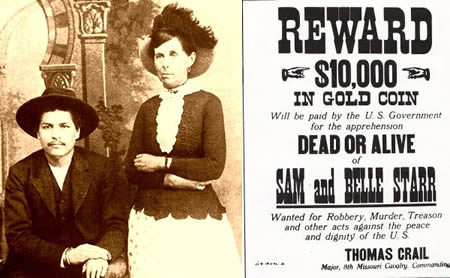
Belle Starr was one of the wildest women of the West - an outlaw who would do anything for a profit. The flamboyant "Bandit Queen" was born Myra Belle Shirley in Missouri in February 8, 1848. While a child, her family moved to Texas. Myra was barely in her teens when she began associating with the seedier elements in her neighborhood. She had soon made acquaintances with a couple of hoods by the name of Frank and Jesse James.
Over the next few years she entered into a relationship with a member of their gang, Cole Younger and had a child with him. She was now an established member of the outlaw community. Moving on from Younger she married a horse thief by the name of Jim Reed and had a son with him. It wasn't long before the outlaw life caught up with Reed and he was killed in a gunfight. Belle then moved to the Indian Territory where she entered into her second marriage, this time with a Cherokee Indian rogue by the name of Sam Starr. The Bandit couple formed a gang around themselves and, from their hide-away on the Canadian River, entered upon a life of rustling, horse stealing and bootlegging whiskey to Indians. The brains behind these operations, carefully planning each move, was the woman who was now known as Belle Starr.
Sam and Belle found the bandit life very lucrative. She would use her money liberally to bribe the freedom of any gang members who were captured. Failing this, she would tempt the lawmen with her womanly charms, almost always achieving her ends – the release of compatriots.
The nearest settlement to the Starr gang's operation was Fort Smith. The local Magistrate was famous Judge Isaac Parker – the hanging Judge. Parker became determined to put Belle Starr behind bars. Several times his Deputies had brought Belle in to face various charges like rustling or bootlegging. Yet, each time she was set free due to lack of evidence. In the fall of 1882, however, Parker got lucky when Belle was caught red handed as she attempted to steal a neighbor's horse. He finally had something that would stick. After a trial, he sentenced Belle to two six month prison terms. After nine months she was let off for good behavior.
Belle's time behind bars, however, did nothing to change her in her chosen life course. Upon release she went straight back to her life of rustling and bootlegging. In 1886 she again became a widow when Sam was fatally shot at a party. Not one to waste time mourning, Belle soon got into a relationship with a younger desperado who went under the unlikely alias of Blue Duck. Blue Duck got himself into deep water when he murdered a local farmer. The evidence was overwhelming and he was soon standing in the dock before the hanging judge. Parker sentenced him to hang. Belle however wasn't prepared to see her lover hang. She hired the very best lawyers in the District. They ended up appealing the case all the way to the White House. President Grover Cleveland commuted the death sentence to life imprisonment.
In 1889 Belle entered into her third marriage, this time with a much younger bandit by the name of Jim July. This marriage, however, would be the death of her. The relationship was particularly stormy.
After one fierce quarrel, July was reported to have offered an accomplice $200 to kill his wife. When the offer was rejected, July screamed, “ Hell – I'll kill the old hag myself and spend the money for whiskey!” A few days later Belle Starr, the Bandit Queen, was shot to death from an ambush on a lonely country road. She was 41 years of age.